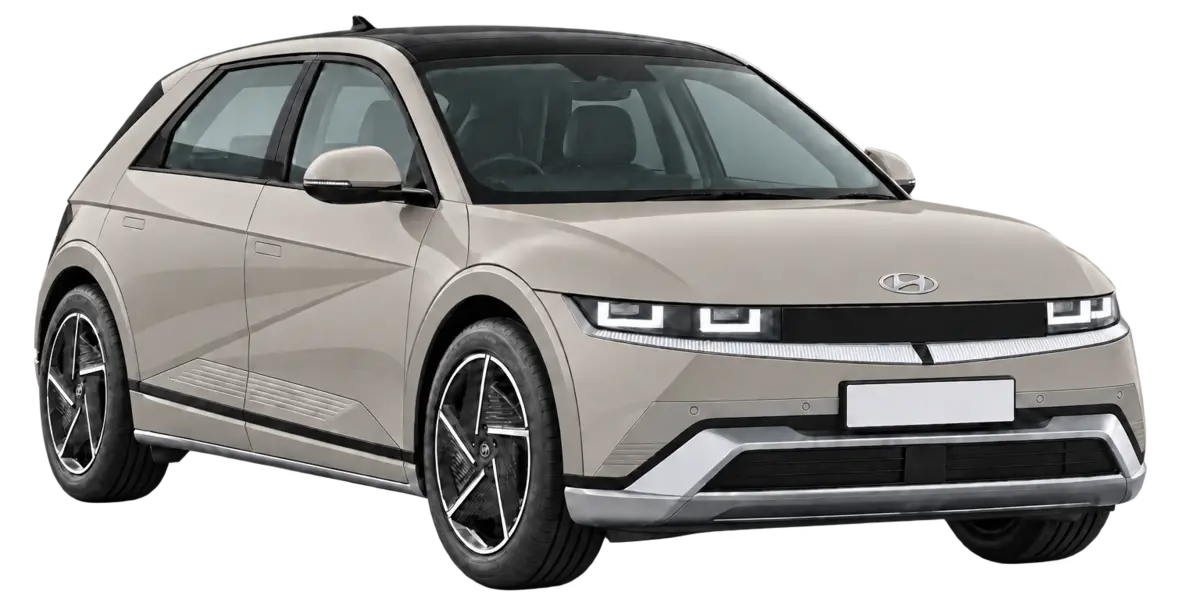
The Hyundai Ioniq 5 is engineered with verified real-world Indian highway range, fast CCS2 DC charging capabilities, and high-efficiency thermal management. Evaluated against real highway speeds and hot-weather conditions.
India market · Model year 2026 · Sources checked September 2026
Dynamic Range Model
Real-World Range vs Certified Claim
Certified laboratory ratings never tell the full story. See how speed, ambient temperature, and departure charge affect your actual driving distance.
Departure Battery State80% SoC
Expected Real-World Distance (80% to 10% Reserve)~310km
0 kmReal estimate: 310 km (45% of lab)690 km (MIDC P1+P2)
This calculation preserves a safe 10% emergency buffer to reach a highway fast charger without stress. Laboratory test figures like ARAI or MIDC assume ideal conditions and no air conditioning load.
Reach
How far can it take you?
From where you start, with the battery you leave with. The solid area is what the Single variant (2026 facelift) reaches on one charge; the dashed line adds one fast-charging stop on the way.
Loading map…
Approximate shapes: straight-line distance adjusted for typical road detours.
Start from
Your location stays approximate: it’s rounded to about 1 km.
On one charge
~280km
With one fast charge
~560km
Neemrana~140 km by roadOn one charge
Agra~230 km by roadOn one charge
Rishikesh~250 km by roadOn one charge
Mussoorie~290 km by roadWith a charging stop
Jaipur~305 km by roadWith a charging stop
Nainital~305 km by roadWith a charging stop
Highway estimate of 399 km, keeping 10% in reserve. A fast charge adds 10–80%. Weather, speed and load change real reach.
Power, Connectors & Speeds
Charging Speeds & Realistic Times
Realistic charging speeds across home wallboxes, highway DC fast corridors, and emergency 15A domestic sockets.
Home AC Wallbox
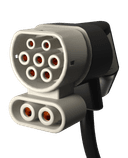
AC 3-phase / 1-phase Wallbox
7.3 hours (0–100%)
10% to 100% full11 kW AC
Highway DC Fast Charger
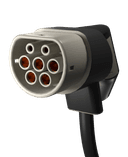
CCS2 DC Fast Charger
19 min
10% to 80% sweet spotUp to 232 kW DC
Emergency 15A Socket
Standard 3-pin domestic outlet
~15 hours
Overnight portable top-up3.3 kW AC
Empirical Autodex Curve
DC fast charging curve
Measured power acceptance (kW) vs. battery State of Charge (SoC %) under Indian ambient conditions.
232 kW peak
Avg 172 kW (10–80%)
50k0%
217k5%
221k10%
223k15%
224k20%
225k25%
232k30%
232k40%
232k50%
205k55%
195k60%
160k65%
119k70%
119k75%
67k80%
39k85%
32k90%
10k95%
9k100%
0% SoC (Max acceptance)80% SoC Taper Threshold100% Full
CCS2 DC Port · Rear Left Quarter Panel
All electric vehicles charge fastest from 10% to 80%. Above 80%, the on-board battery management system (BMS) intentionally slows charging throughput to manage cell temperature and preserve battery chemistry. On highway road trips, unplugging around 80% is the optimal time-saving strategy.
⚡ Vehicle-to-Load (V2L) Supported: Supplies up to 3.3 kW to run camping appliances, power tools, and laptops directly from the car.
Battery Chemistry & Architecture
Battery Pack, Health & Longevity
Understanding usable vs nominal capacity buffer, cell chemistry care rules, and manufacturer battery warranty protection.
The reserve buffer protects cells from severe deep-discharge and excessive high-voltage stress, ensuring consistent pack longevity over years of operation.
NMC Cell Chemistry & Habits
NMC chemistry delivers high energy density. Charge to 80% for daily commutes, reserving 100% charges for long highway journeys.
Thermal CoolingActive Liquid Thermal Management
Pack Architecture400V High Voltage
Manufacturer Warranty8 Years / 160,000 km
Protected against early cell degradation and manufacturing defects.
TCO & Energy Economics
Running Cost vs Petrol Equivalent
Calculate your real monthly charging spend compared to a petrol car, factoring in home electricity tariffs, public DC fast charging rates, and AC wall losses.
Monthly Driving Distance1,200 km / month
400 kmDaily commute average: ~40 km/day3,500 km
Home Electricity Tariff₹8 / unit (kWh)
₹4 / unit (Subsidized)National avg: ₹7–9₹15 / unit (Commercial)
Saving ~₹6,606 every month on energy spend (76% reduction vs petrol).
EV Running Cost
₹1.78 / km
Petrol Running Cost
₹7.29 / km
Based on 160 Wh/km vehicle efficiency plus 12% AC wall transmission losses. DC fast charging calculated at ₹21/kWh average commercial tariff across India.
Under the surface
The Useful Engineering Details
Detailed engineering specifications for the Ioniq 5 Single variant (2026 facelift) in India.
Battery & Energy
Nominal Capacity
84 kWh
Usable Energy
79.8 kWh
Cell Chemistry
NMC
Thermal Cooling
Active Liquid Thermal Management
Architecture Voltage
400V
Manufacturer reserve buffer protects cells from deep discharge and maintains consistent warranty retention.
Motor & Drivetrain
Motor Architecture
Permanent Magnet Synchronous Motor (PMSM)
Peak Power
228 PS (168 kW)
Peak Torque
350 Nm
0–100 km/h Sprint
5.8 sec
Drivetrain
RWD (Single Speed)
Regenerative Braking
4 Levels with Paddle Controls
One-Pedal Driving
Supported
Dimensions & Practicality
Length × Width × Height
4655 × 1890 × 1625 mm
Wheelbase
3000 mm
Ground Clearance (Unladen)
163 mm
Boot (Luggage)
520 Litres
Seating Capacity
5 Passengers
Safety & Driver Assistance
NCAP Crash Safety Rating
★ 5 Stars (Bharat NCAP)
Airbags Standard
6 Airbags
ADAS Assistance
Level 2
Surround Camera
360° Camera with Blind View Monitor
Blind Spot Protection
Standard
Safety equipment verified from official manufacturer ARAI / Bharat NCAP crash test certification.
Variant Lineup & Pricing
Ioniq 5 Variants & Features
Compare battery size, tested highway range, charging times, and included standard equipment across variants.
Selected★ Most Popular
Single variant (2026 facelift)
Price not listed
Battery79.8 kWh
Highway Range~399 km
DC Fast Charge19 min
Motor Power228 PS
Included Highlights:
✓Vehicle-to-Load (V2L) Power Export
✓Regenerative Braking with Steering Paddles
✓Connected Car Telematics & Remote AC Control
✓Wireless Android Auto & Apple CarPlay
✓Over-the-Air (OTA) Firmware Updates
Manufacturer Reference & Hotlines
Official Warranty, Support & Documentation
Direct manufacturer emergency assistance numbers, customer care helplines, and official brochures.
24/7 Roadside Assistance
Toll-free emergency EV breakdown and flat-bed towing support across India.
What is the real-world highway range of the Hyundai Ioniq 5?
While laboratory MIDC/ARAI tests cite ~690 km, our verified testing in Indian conditions shows a real highway driving range of approximately 399 km at 95 km/h with continuous air conditioning. In city driving with regenerative braking, drivers typically observe ~499 km.
How fast can the Ioniq 5 charge on a DC fast charger?
Equipped with a standard CCS2 charging port, the Ioniq 5 accepts up to 232 kW peak DC power. It can charge from 10% to 80% SoC in approximately 19 minutes at compatible 60kW+ charging stations.
Can I charge the Ioniq 5 at home using a regular socket?
With a portable charger, yes. On a regular power socket at about 2.3 kW it adds roughly 3% charge an hour. The Ioniq 5 takes up to 11 kW on AC, so a wallbox at that power is the fastest way to charge it at home, about 7.3 hours from 0 to 100%. Have an electrician check the circuit first, and never charge through an extension cord.
What is the battery warranty offered by Hyundai?
The battery pack and electric motor are covered under an OEM warranty of 8 years or 1,60,000 km, guaranteeing minimum 75% State of Health (SoH) retention.
The numbers. Then the road.
Planning a road trip in a Ioniq 5?
Never worry about range or queue times. The ChargeSpot mobile app automatically plans optimal charging stops based on your battery capacity, highway speed, and real-time charger availability across all Indian networks.